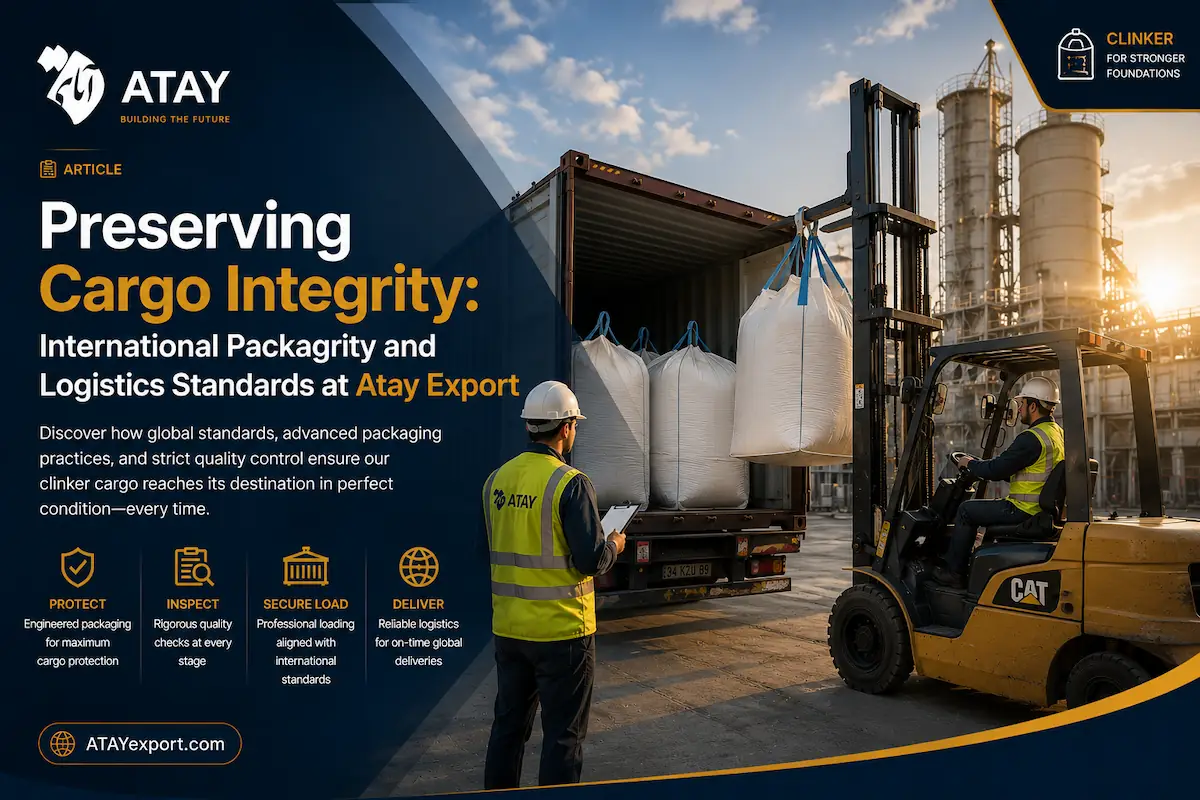
Preserving Cargo Integrity: International Packaging and Logistics Standards at Atay Export
1. Introduction: When Logistics Matters as Much as the Commodity Itself
In the international trade of building materials and industrial products, product quality is only one component of a successful transaction. Even when goods are supplied in accordance with agreed specifications, inadequate packaging, inappropriate transport methods, or poorly coordinated logistics operations can result in cargo damage and significant additional costs for all parties involved.
The importance of logistics becomes even more apparent in large-scale shipments. Damage to a container of steel products or a bulk cargo shipment of tens of thousands of tons can have consequences far beyond the direct value of the goods, affecting project schedules, increasing logistics costs, and disrupting procurement plans at the destination.
For this reason, in professional B2B trade, preserving cargo integrity is not solely dependent on the quality of the product itself. It is the result of a series of interconnected decisions involving packaging engineering, cargo protection, transportation planning, port operations, logistics documentation, Incoterms® compliance, and marine insurance.
At ATAY Holding, international trade activities are managed through ATAY Export, the group’s dedicated export division. Together, these elements are treated as interconnected components of a unified export strategy designed to help ensure that cargo reaches its destination in a condition appropriate to the product type, transportation route, and contractual requirements.
2. Transport Mode Selection and Logistics Strategy Planning
One of the first steps in planning an export shipment is selecting the most suitable transportation method. This decision goes far beyond choosing a mode of transport; it directly affects transportation costs, delivery schedules, packaging requirements, loading capacities, and destination port considerations.
The selection process typically takes several factors into account, including:
- Product type and characteristics
- Order volume
- Cargo weight and density
- Destination port infrastructure
- Buyer’s unloading capabilities
- Required delivery timeline
- Freight costs and project budget
For many international shipments, containerized transportation is preferred due to its flexibility, ease of handling, and broad availability across global shipping networks. In contrast, for high-volume commodities such as clinker, gypsum rock, processed minerals, and other bulk materials, bulk shipping may offer a more economical solution.
In large construction and infrastructure projects, the choice between containerized and bulk transportation is not merely a logistics decision. It can directly influence the landed cost per ton, unloading efficiency at the destination, and overall project execution timelines.
3. Export Packaging Standards (Packaging Engineering)
In international trade, packaging serves a purpose far beyond simple protection. It forms an integral part of cargo logistics engineering and plays a critical role in maintaining cargo integrity throughout the supply chain.
Export Jumbo Bags (FIBC / Big Bags)
For many powdered and bulk commodities such as gypsum, cement, processed minerals, and various industrial materials, Flexible Intermediate Bulk Containers (FIBC)—commonly known as jumbo bags—are widely used.
Depending on the cargo type and transportation conditions, these bags may incorporate features such as:
- Various load capacities tailored to cargo requirements
- Appropriate Safety Factors (SF) for export applications
- Protective inner liners
- Moisture-resistant laminated coatings
- UV-stabilized materials for outdoor storage conditions
These features help maintain packaging performance during transportation, temporary storage, and port handling operations.
Packaging of Steel Products
In the export of steel sections and metal products, packaging plays a vital role in preventing physical damage during transit.
Depending on product specifications, steel bundles may be secured using high-tensile steel strapping systems, while protective materials can be applied at critical contact points to minimize surface damage. Bundle arrangements are also designed to ensure balanced weight distribution during transportation, helping reduce unnecessary stress on both the cargo and transport equipment.
4. Moisture Management and Cargo Protection
Moisture exposure is one of the most significant logistical challenges when transporting certain building materials across international supply chains. Products such as cement, gypsum, processed minerals, and industrial powder materials can be particularly sensitive to moisture ingress. As a result, moisture management forms an important part of logistics planning.
Depending on the cargo type and transportation conditions, preventive measures may include:
- The use of protective inner liners
- Moisture-resistant laminated packaging
- Selection of clean and dry shipping containers
- Monitoring storage conditions during temporary warehousing
- Reducing the risk of container condensation (“container rain”)
Proper management of these factors can significantly reduce the likelihood of moisture-related damage during long-distance transportation.
5. Cargo Lashing and Securing
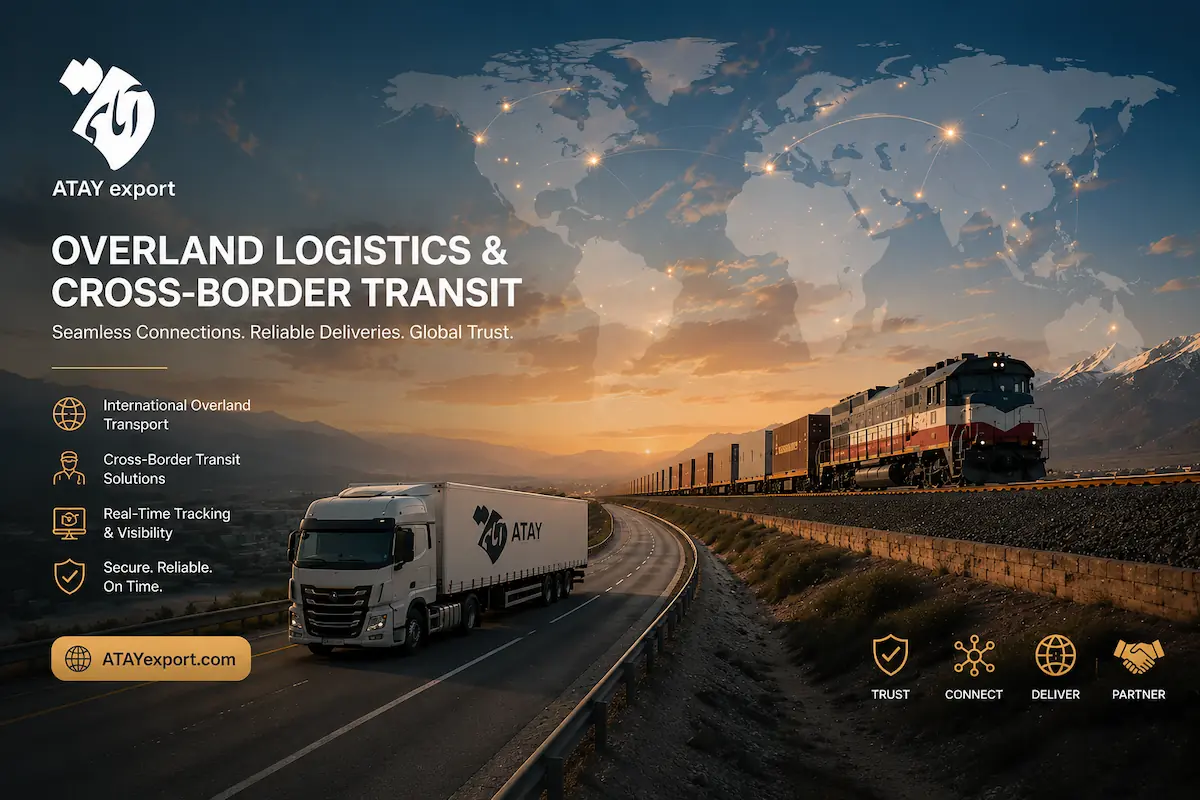
Once cargo has been packaged, proper securing and stabilization become critical. During maritime, rail, and road transportation, cargo is subjected to dynamic forces generated by acceleration, braking, vibration, and weather conditions. For this reason, cargo securing methods are selected according to cargo type, weight, and transportation mode.
In containerized shipments, securing systems may include:
- Ratchet and webbing straps
- Steel wire ropes and metal fittings
- Dunnage materials
- Blocking systems
- Stabilization wedges
The objective is to prevent unwanted cargo movement while ensuring proper weight distribution throughout the journey.
Bulk Cargo and Trimming Operations
Cargo stability is particularly important in bulk vessel transportation. For commodities such as clinker, gypsum rock, and certain minerals transported aboard bulk carriers, cargo trimming is performed inside the vessel’s cargo holds. This process helps achieve uniform weight distribution and minimizes the risk of cargo shifting during adverse sea conditions.
6. Port Handling and International Freight Management
A considerable portion of logistics-related risks occurs not at the production facility or during ocean transit, but within port environments. Loading, unloading, internal terminal movements, temporary storage, and transfers between transportation modes can all affect the condition of a shipment. Effective coordination with port operators and proper management of port operations therefore play an important role in maintaining cargo integrity.
For projects involving transshipment ports, additional attention is often given to dwell times, storage conditions, and coordination among multiple logistics stakeholders.
The Role of Freight Forwarding in the Supply Chain
A key component of international logistics is freight management through a network of freight forwarders and logistics partners. Depending on shipment volume, cargo characteristics, and destination requirements, freight solutions may involve containerized transportation, breakbulk services, or bulk vessel arrangements.
These activities may include:
- Freight space booking
- Coordination with shipping lines
- Transit planning and optimization
- Cargo tracking and shipment monitoring
- Communication management among supply chain participants
Logistics Documentation
International logistics extends beyond the physical movement of goods. Accurate documentation is equally important to ensure smooth cargo movement and commercial execution. Depending on the nature of the transaction and transportation method, logistics documentation may include:
- Bill of Lading (B/L)
- Packing List
- Commercial Invoice
- Other transportation-related documents
Maintaining consistency between cargo movements and document flows is essential for minimizing operational delays and facilitating international trade processes.
7. Managing Responsibilities and Risk Allocation Under Incoterms® 2020
In international trade, clearly defining responsibilities and risk-transfer points is just as important as the physical transportation process itself. Incoterms® 2020 provides a globally recognized framework for allocating costs, responsibilities, and risks between buyers and sellers.
- FOB (Free On Board): Under FOB terms, the seller is responsible for preparing the goods, completing export formalities, and loading the cargo onto the vessel at the port of shipment. For example, under an FOB Bandar Abbas agreement, the risk of loss or damage transfers to the buyer once the goods are loaded on board the vessel.
- CFR (Cost and Freight): Under CFR terms, the seller performs all obligations associated with FOB and additionally pays the ocean freight charges to the agreed destination port. However, contrary to a common misconception, the transfer of risk still occurs when the cargo is loaded on board the vessel at the port of origin, even though the seller is responsible for the freight cost. Understanding this distinction is essential for effective risk management and insurance planning.
8. Marine Insurance
International transportation inevitably involves risks that are beyond the direct control of buyers and sellers. Adverse weather conditions, port incidents, handling damage, and other unforeseen events can affect cargo during transit. For this reason, marine cargo insurance remains one of the most important risk-management tools in international trade.
Depending on the transaction structure, cargo type, and commercial requirements, insurance arrangements may be based on the internationally recognized Institute Cargo Clauses (ICC) framework:
- Institute Cargo Clauses (A) – Providing the broadest level of protection available within the Institute Cargo Clauses framework.
- Institute Cargo Clauses (B) – Providing coverage for a specified range of insured risks.
- Institute Cargo Clauses (C) – Providing a more limited scope of coverage for defined perils.
The selection of an appropriate insurance structure should reflect the nature of the cargo, transportation route, and risk profile of the transaction.
9. Conclusion
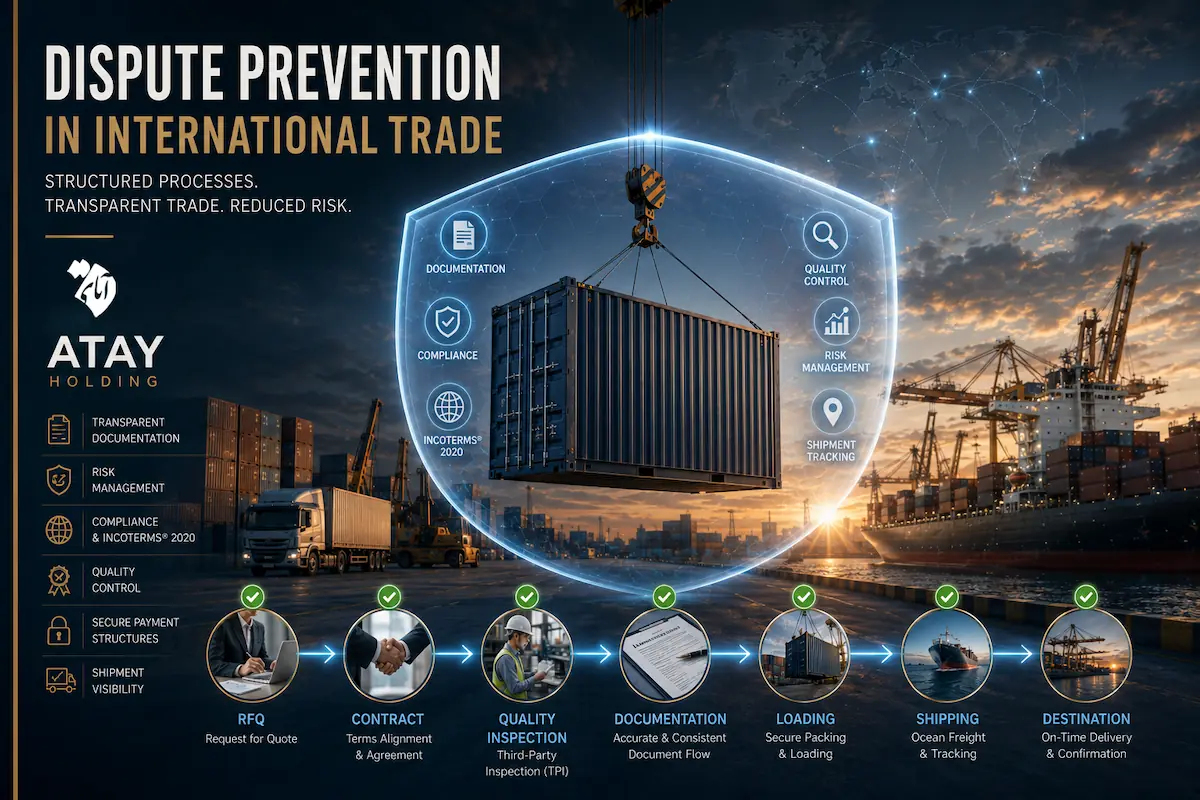
Preserving cargo integrity in international trade is not the result of a single action. Rather, it is achieved through a coordinated chain of decisions and operational processes—from transportation planning and packaging engineering to cargo protection, securing methods, port handling, freight management, logistics documentation, risk allocation under Incoterms®, and marine insurance.
At Atay Holding, through its dedicated export division, Atay Export, these elements are managed as interconnected parts of a unified logistics strategy aimed at supporting safe, predictable, and efficient international cargo movements.
Whether you are sourcing cement, clinker, gypsum, steel products, minerals, or industrial materials, selecting the right logistics strategy can significantly influence landed costs, delivery reliability, and cargo safety.
Next Steps for Your Project’s Logistics Alignment
To discuss your upcoming procurement project, request a freight estimate, or explore suitable transportation solutions, the Atay Export team is ready to assist:
- To initiate an accurate freight and shipping cost estimation, please submit a formal inquiry through our Request for Quote (RFQ) page.
- To consult with our international freight experts regarding tailored packaging configurations or Incoterms risk allocation, please Contact Our International Trade Team directly.
Leave a Reply