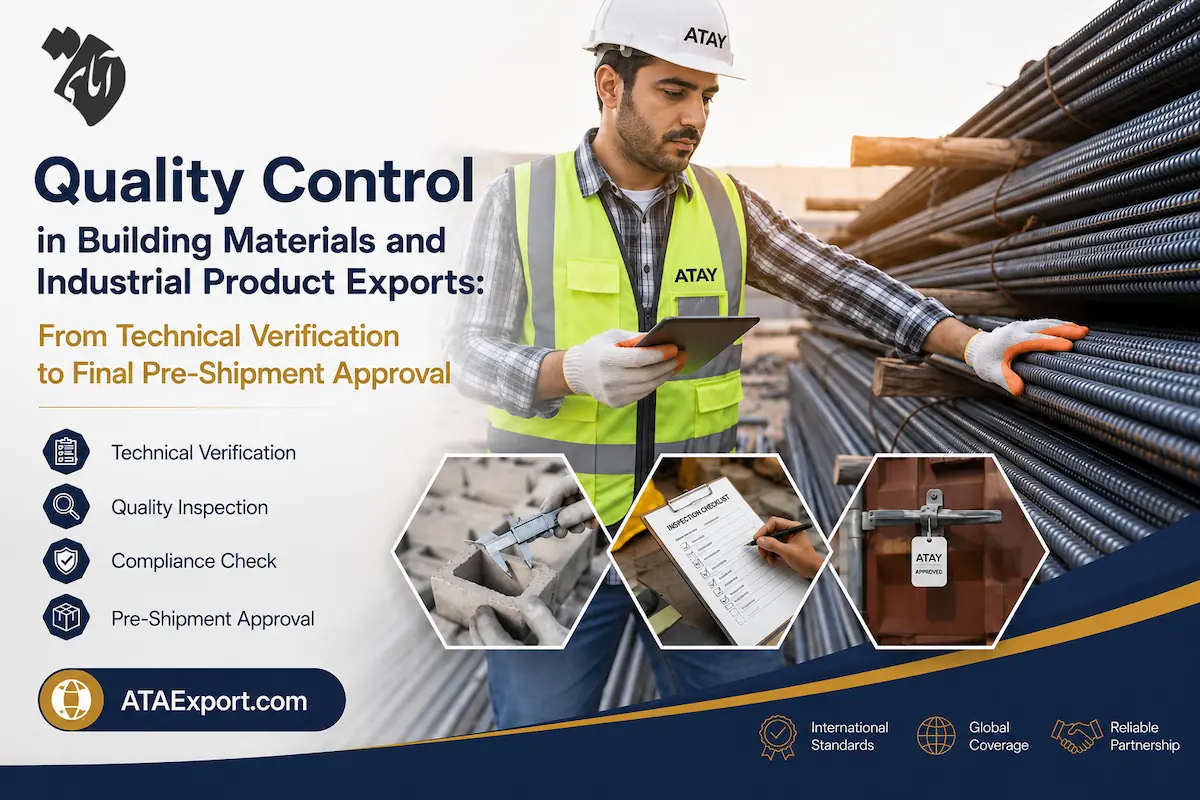
Quality Control in Building Materials and Industrial Product Exports: From Technical Verification to Final Pre-Shipment Approval
1. Introduction: Quality Control as a Risk Mitigation Tool in International Trade
In international B2B trade, the success of a transaction is not determined solely by competitive pricing or access to supply sources. For international traders and intermediaries, any discrepancy in product quality, technical specifications, weight, or packaging conditions can result in significant additional costs, demurrage charges, supply chain disruptions, contractual disputes, and reputational damage.
For this reason, Quality Control (QC) has become a fundamental component of risk management in international trade. Through a coordinated series of activities—from reviewing technical specifications and supporting documentation to sampling, loading supervision, and final documentation—QC helps reduce the risk of discrepancies between the delivered cargo and the specifications agreed upon in the contract.
At Atay Holding, quality control is integrated as a key stage of the sourcing and sales process, enabling buyers to make informed decisions based on clear and transparent information regarding their cargo specifications.
2. Pre-Procurement Documentation and Technical Verification
In practice, quality control begins well before loading or even cargo preparation. The first step involves a detailed review of the buyer’s technical requirements and their alignment with applicable standards and sourcing capabilities, helping prevent misunderstandings and inconsistencies in later stages.
At this stage, the following elements are reviewed and finalized as the technical foundation of the transaction:
- Reference Standards: Verification of compliance with applicable standards such as EN (European Standards), ASTM (American Standards), or mutually agreed national standards (such as ISIRI in the cement industry).
- Technical Specifications and Performance Requirements: Precise definition of product grades, chemical compositions, physical properties, and performance criteria.
- Packaging and Storage Requirements: Selection of appropriate packaging formats—including bulk, jumbo bags, or bagged packaging—based on the nature of the product and transportation conditions.
- Transportation and Loading Requirements: Coordination of logistics planning with the operational capabilities of ports, rail networks, and land transportation systems.
- Required Trade Documentation: Identification of certificates and documents required to facilitate customs clearance and regulatory compliance at the destination.
The objective of this stage is to establish a clear and shared understanding of the product specifications that will govern the sourcing and delivery process.
3. Sampling and Product Evaluation
Once the cargo is prepared, the sampling and product evaluation process begins. This phase is carried out under the coordination and supervision of Atay Holding’s export team. Where contractually agreed, the buyer’s representative or an appointed inspection company may also participate in the process.
The technical parameters evaluated in accredited laboratories vary depending on the product category:
| Product Group | Key Technical Parameters Evaluated | Documentation Issued |
|---|---|---|
| Cement & Clinker | Compressive strength, setting time, fineness (Blaine), free lime content, and chemical composition | Mill Test Certificate (MTC) |
| Steel & Metal Products | Dimensions and manufacturing tolerances, mechanical properties (including tensile testing), chemical composition, and surface coating quality | Certificate of Analysis (COA) |
| Gypsum & Mineral Products | Purity level, particle size distribution (mesh), moisture content, and initial and final setting times | Laboratory Report |
Note: In addition to technical testing, weight verification and confirmation of cargo quantities against contractual requirements form an important part of this process.
4. Loading Supervision and Maintaining Cargo Integrity
Even after laboratory approval, the loading phase remains one of the most sensitive stages of the logistics chain. For traders and intermediaries, quantity control and proper cargo handling are just as important as product quality.
During rail, road, or sea loading operations, the Atay logistics team continuously monitors the following:
- Environmental Conditions During Loading: Avoiding the loading of moisture-sensitive products-such as bagged cement and gypsum-during rainfall or periods of excessive humidity, and utilizing suitable protective coverings such as tarpaulins or laminated transport covers.
- Packaging Condition Assessment: Ensuring that jumbo bags, paper sacks, and protective coatings are free from tears, damage, or visible defects.
- Prevention of Cross-Contamination: Maintaining strict separation between different cargo lots to preserve product consistency.
- Weight Verification: Measuring final loaded quantities using calibrated weighbridges and verifying consistency with order specifications and shipping records.
Depending on the nature of the product, loading may be carried out in bulk, bagged, jumbo bag, or containerized formats. The primary objective at this stage is to preserve product quality and prevent discrepancies at the time of delivery.
5. Sealing, Weighing, and Final Documentation
Once loading operations are completed, measures are taken to maintain cargo integrity throughout transit to the final destination. In containerized shipments, recording and verifying the Seal Number is a standard procedure used to reduce the risk of tampering or unauthorized access during transportation.
The final cargo weight is also reconciled with the information contained in shipping documents to ensure consistency between commercial and logistics records.
In addition to transport documents, approved technical documentation—including Mill Test Certificates (MTCs), Certificates of Analysis (COAs), and Laboratory Reports, where applicable—is provided to the buyer to support customs and documentary compliance requirements.
6. Third-Party Inspection (TPI): A Tool for Greater Transparency
In international trade transactions, buyers and intermediaries often choose to utilize independent inspection services to enhance transparency and confidence. Atay Holding’s approach is based on transparency, cooperation, and operational flexibility.
Atay Holding’s Position on Third-Party Inspection (TPI)
We fully support and facilitate inspections conducted by internationally recognized independent inspection agencies such as SGS, Cotecna, or other mutually approved organizations.
The scope, timing, and type of inspection—including Pre-Shipment Inspection (PSI), Loading Supervision, or Sampling Inspection—should be clearly defined and agreed upon within the commercial contract.
While third-party inspection is not a mandatory requirement for every transaction, it can be an effective mechanism for strengthening trust, improving transparency, and helping intermediaries demonstrate compliance to their end-users.
7. Conclusion and Next Steps
In the export of building materials and industrial products, quality control extends far beyond laboratory testing. It is a structured process that begins with the verification of technical specifications and applicable standards and continues through sampling, loading supervision, documentation, and, where required, independent inspection.
Through the centralized management of these processes, Atay Holding provides a structured and reliable framework that enables international traders and intermediaries to reduce operational uncertainty while focusing on market development and business growth. This approach supports the establishment of long-term and sustainable relationships across the global supply chain.
Next Steps for Securing Your Cargo
If you would like to initiate a sourcing process aligned with Atay Holding’s quality control standards, or if you require assistance reviewing technical aspects of an upcoming transaction, we invite you to contact our team:
- Submit a formal inquiry through our Request for Quote (RFQ) page.
- Contact our Technical and Logistics Team for consultation regarding Third-Party Inspection (TPI) requirements and quality assurance procedures.
Leave a Reply