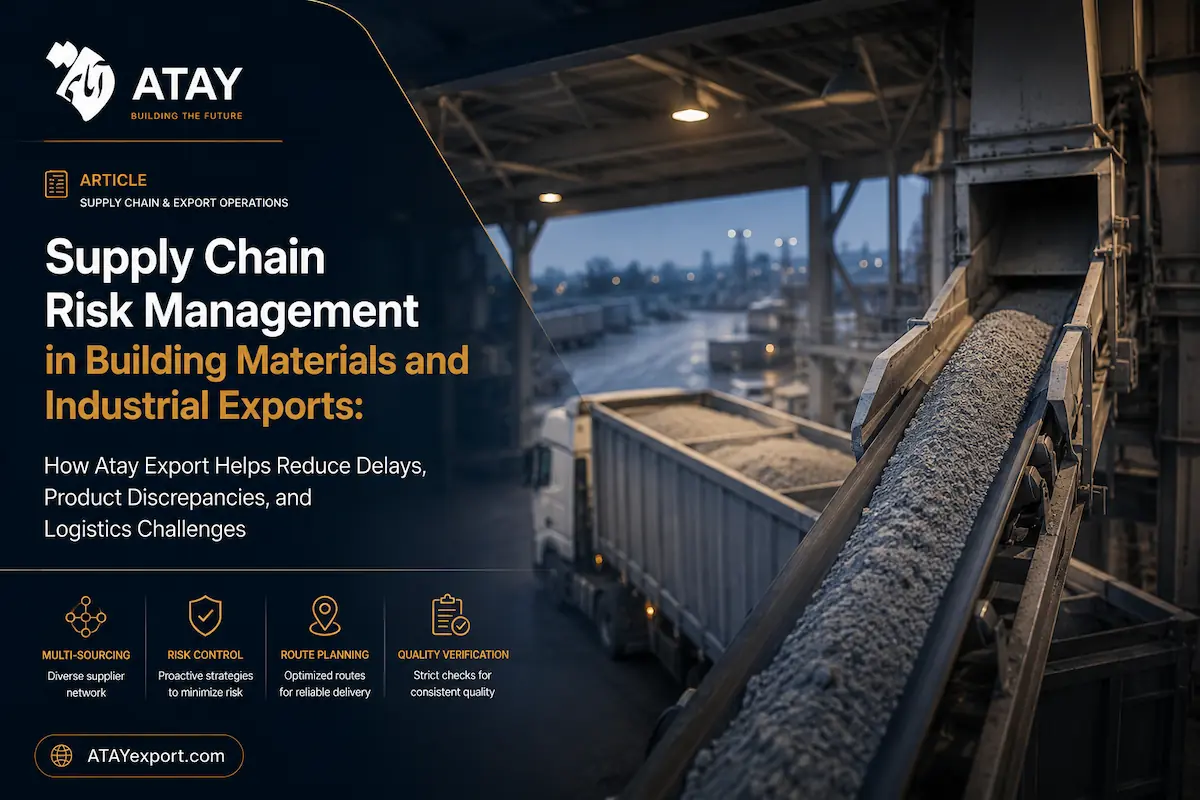
Supply Chain Risk Management in Building Materials and Industrial Exports: How ATAY Helps Reduce Delays, Product Discrepancies, and Logistics Challenges
1. Introduction: Where Small Delays Can Become Major Project Costs
In international trade, the success of a transaction depends on much more than product quality or competitive pricing. For buyers of building materials, mineral commodities, and industrial products, many of the most critical challenges arise after an order has been placed.
Production interruptions, transportation constraints, technical discrepancies, documentation errors, and border delays can all affect project schedules and create additional costs for contractors, importers, and project owners. At the same time, fluctuations in commodity prices, transportation costs, and market conditions can create uncertainty in procurement planning. As a result, effective supply chain management requires more than coordinating shipments. It also involves selecting reliable supply sources, verifying product compliance, planning purchases strategically, and maintaining clear communication throughout the process.
For large infrastructure, industrial, and construction projects, choosing a trade partner is often also a decision about risk management. Atay Export, the dedicated export division of Atay Holding, approaches procurement and export operations with this perspective, aiming to support buyers through a more structured and transparent supply process.
2. Reducing Supply Risk Through a Multi-Sourcing Strategy
One of the most common risks in international procurement is dependence on a single manufacturer. Planned maintenance, seasonal energy restrictions, unexpected increases in demand, or operational disruptions can affect production schedules and create supply uncertainty.
To improve supply flexibility, ATAY Export works with a network of more than 20 manufacturers and suppliers across multiple product categories, including cement, clinker, gypsum, steel products, building stone, ceramic tiles, and selected mineral commodities.
This diversified sourcing structure helps reduce dependence on a single production facility and provides additional sourcing options when market conditions change. For buyers managing long-term projects, access to alternative supply channels can play an important role in maintaining procurement continuity.
3. Reducing Quality Risk Through Pre-Shipment Verification
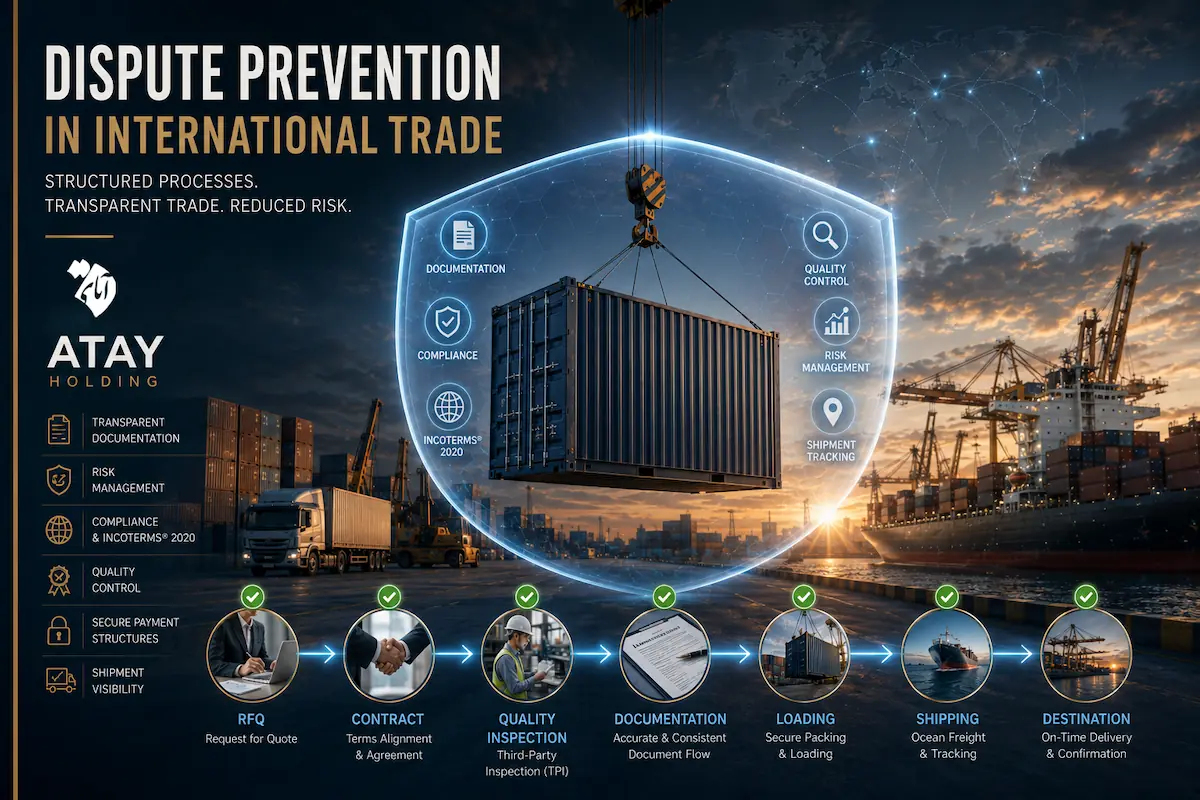
In the export of cement, clinker, gypsum, steel products, stone, and other industrial materials, any discrepancy between agreed specifications and delivered goods can lead to delays, additional costs, or commercial disputes.
To reduce this risk, product documentation and technical requirements are thoroughly reviewed before shipment. Depending on the product category and project requirements, the process may include:
- Reviewing manufacturer laboratory reports and technical documentation.
- Comparing product specifications with contractual requirements and destination standards.
- Sampling and verification procedures when required.
- Coordinating independent third-party inspections, such as SGS or Bureau Veritas, upon customer request.
In certain cases, representatives from Atay Holding may also supervise loading operations to help ensure that products are prepared and dispatched according to the agreed requirements.
4. Managing Logistics Risk Through Route Selection and Transit Planning
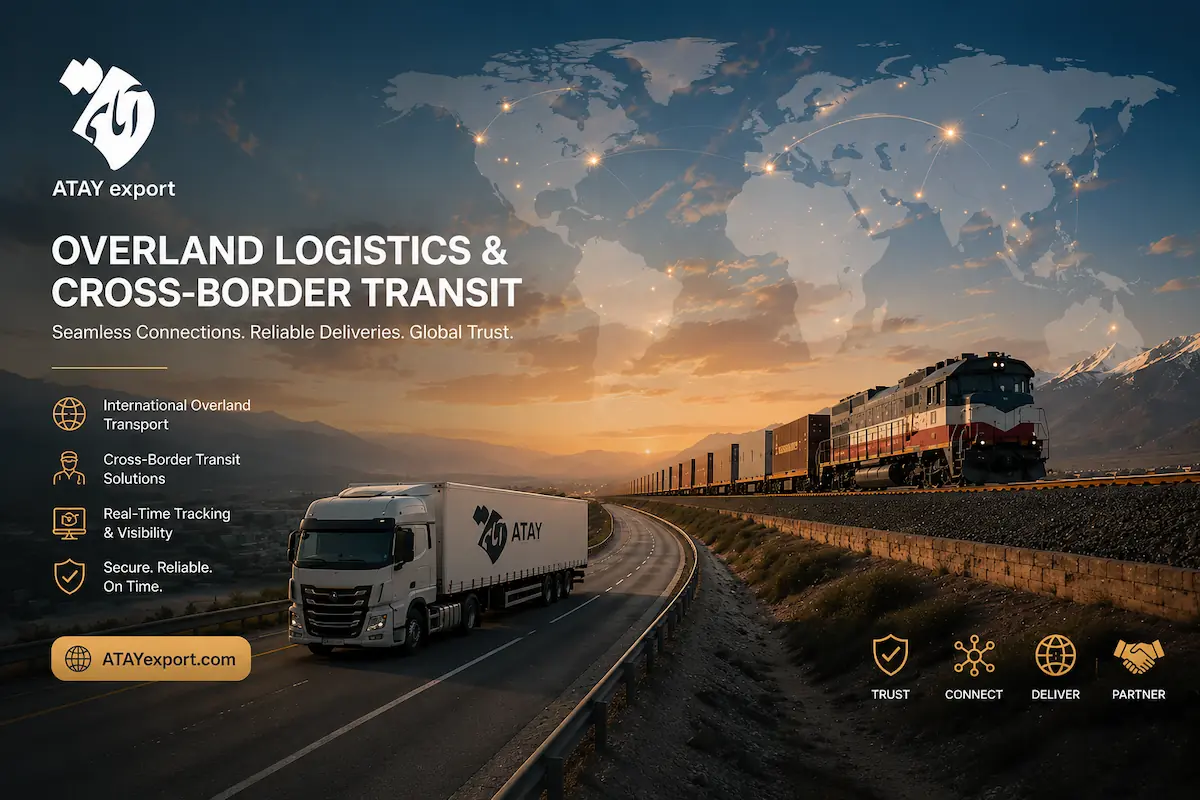
Once cargo is ready for dispatch, logistics planning becomes a key part of risk management. Selecting the appropriate transportation mode, border crossing, port, or transit route can significantly influence delivery schedules and transportation costs.
This is particularly important for bulk commodities such as cement, clinker, gypsum, steel products, and mineral materials, where freight costs and delivery timing can directly affect project economics. Because many of our export destinations are located in neighboring markets, road transportation represents a significant portion of our operations. However, rail and sea freight solutions are also evaluated depending on cargo volume, destination, and project requirements.
Our logistics planning process focuses on:
- Selecting suitable transportation methods based on cargo characteristics and delivery schedules.
- Evaluating route options, border crossings, and export gateways.
- Monitoring transportation conditions and seasonal logistics challenges.
- Improving visibility throughout the transit process to support more predictable delivery planning.
Recommended Reading: For comprehensive details on cross-border logistics routes, road and rail fleet configurations, and managing transit documentation across Central Asia and the Middle East, explore “Overland Logistics for Building Materials and Industrial Exports: Managing Road, Rail, and Cross-Border Transit at ATAY Export”.
5. Beyond Product Supply: Building a More Reliable Supply Chain
In international trade, competitive pricing alone is rarely enough to ensure project success. Reliable procurement requires effective management of supply, quality, logistics, documentation, and market-related risks throughout the supply chain.
Through a network of more than 20 manufacturers and suppliers, practical experience in construction-related industries, and a structured approach to export operations, Atay Export works to provide international buyers with a more transparent and predictable sourcing process. For many projects, the value of a supply partner is not measured only by the products delivered, but also by their ability to help manage the risks that can affect schedules, budgets, and project performance.
Planning an Upcoming Procurement Project?
Whether you are sourcing cement, clinker, gypsum, steel products, building stone, ceramic materials, or mineral commodities, our team can help evaluate suitable sourcing and logistics options based on your project requirements.
- To submit your procurement specifications, please request an official evaluation on our Request for Quote (RFQ) page.
- To discuss product availability, transportation solutions, and custom delivery planning for your next project, please contact the Atay International Trade Team directly.
Leave a Reply